|
Here is some helpful information on getting started in Motocross
in South Africa. For any questions you are welcome to e-mail [email protected].
Before you look at getting started and buying a bike suited for
motocross, it is best to decide which MX class is for you. Based
on that, you will know which size bike to buy.
It is always advised to make sure of any Rule Changes that have
taken place each year to make sure that you still fit into the correct
class based on age and bike capacity.
|
Motorsport South Africa (MSA)
2018 Motocross Classes
|
|
Class
|
Age
|
Bike Size
|
|
MX 50cc
|
Open to riders from the year of their 4th birthday, to 31
December of the year in which their 9th birthday occurs
|
2 stroke (Water cooled motorcycles not exceeding 52cc)
Carburettor size – 19mm as per the manufacturers specifications
Wheel size - Rear 10” and Front 12”
|
|
MX 65cc
|
Open to riders from the year of their 7th birthday to 31
December of the year in which their 12th birthday occurs.
|
Clutch Lever with gears – motorcycles not exceeding
65cc)
Wheel size – Rear 12” and Front 14”
|
|
MX 85cc Junior
|
Open to riders from the year of their 8th birthday to the
31 December of the year in which their 13th birthday occurs.
|
(Clutch Lever with gears – motorcycles not exceeding
85cc)
Wheel size – Rear 14” and Front 17”
Will be bore and stroke to capacity only and no further restrictions
will apply.
|
|
MX Pro Mini
|
Open to riders from the year of the 10th birthday, to 31
December of the year in which their 15th birthday occurs.
|
85cc 2 stroke
Wheel size – Rear 14” and Front 17” or Rear
16” and Front 19”
|
|
MX High School
|
Open to riders from the year of the 13th birthday, to 31
December of the year in which their 17th birthday occurs.
|
Wheel size – Rear 19” and Front 21”
Two stroke motorcycles not exceeding 126cc
|
|
MX 2
|
Open to riders from the year of the 16th birthday
|
Wheel size – Rear 19” and Front 21”
125cc -150cc 2 stroke & 250cc 4 stroke motorcycles
|
|
MX 1
|
Open to riders from the year of the 17th birthday
|
Wheel size – Rear 19” and Front 21”
125cc 2 stroke - 300cc 2Stroke & 250cc 4 stroke - 450cc
4 stroke motorcycles
|
|
MX 3
|
Open to riders from the year of the riders 30th birthday
|
Wheel Size – Rear 19” and Front 21”
Motorcycles of unrestricted capacity
|
|
MX Ladies
|
Open to riders from the year of their 13th birthday. These
riders can compete on Motorcycles not exceeding 125cc 2 stroke.
Open to riders from the year of their 16th birthday. These
riders can compete on Motorcycles not exceeding 150cc 2 stroke
or 250cc 4 stroke.
|
(Wheel Size – Mixed sizes as per manufacturer)
|
|
MX 2 Stroke (Club Class)
|
Open to riders from the year of the 18th birthday
|
From 125cc and over
|
|
MX Support Class
|
Various
|
Riders from the year of their 13th birthday, to 31 December
of the year in which their 17th birthday occurs (125cc Two
Stroke machines only).
Riders from the year of their 16th birthday (125cc -150cc
2 stroke & 250cc 4 stroke motorcycles).
Riders from the year of their 17th birthday (125cc 2 stroke
- 300cc 2Stroke & 250cc 4 stroke - 450cc 4 stroke motorcycle).
Competitors will not be permitted to participate in both a
National class and the Support class.
|
Once you have chosen a motocross class you can now need to find
a bike. Motocross is a demanding sport, not only on the rider but
also on the bike so it is suggested that you stick to bike brands
that can handle the demands of Motocross.
Some obvious big names: Yamaha, Honda, KTM, Kawasaki, Suzuki, Husqvarna.
|
Step 3: Buy
your riding gear.
|
Protective MX Gear is not only essential but most of it is compulsory.
If you participate in motocross, the rules and regulations require
that you wear the correct protective gear. Failure to do so can
result in exclusion from races. Besides that, the gear offers the
obvious necessary protection that is needed when racing motocross.
|
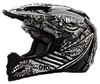
|
MX Helmet
The better the helmet, the better the protection. Make sure
you get the correct type of helmet and the correct size.
|
|
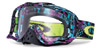
|
MX Goggles
Essential to keep the eyes protected.
|
|
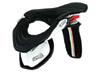
|
Neck Brace (optional)
Essential to protect against neck and back injuries.
|
|
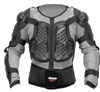
|
Body Armour
You get two types of upper body armour. Full ‘jacket
style’ kits or you can go for the more conventional Chest
Protector with Kidney Belt and elbow guards.
|
|
|
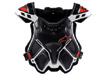
Chest Protector
Worn over or under a jacket, chest protectors can prevent
serious harm in the event of a crash. Constructed from pliable
plastic and foam pads, they provide defense for your chest
and sometimes your shoulders and back.
|
|
|
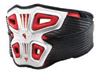
Kidney Belt
A kidney belt saves your back and kidneys from a lot of the
impact and jarring that you receive when riding around a motocross
track.
|
|
|
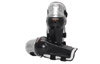
Elbow Guards
|
|
|
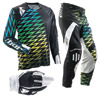
MX Kit
The ever popular riding pants, shirt and gloves come in a
variety of striking designs.
|
|
|
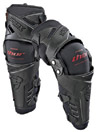
Knee Guards / Knee Braces
A good set of knee guards or knee braces can help keep those
legs and joints protected.
|
|
|
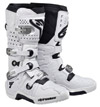
MX Boots
A vital part of your MX kit, these boots are very hard and
rugged and can withstand just about anything.
|
|
Step 4: Get
some lessons.
|
Before you jump into racing it is a very good idea to get some
riding lessons for motocross. If you require lessons, facilities
like African Dream
Adventures or Big5Ventures
are great.

Once you feel you have learned what you need to know, it is then
time to start racing. The next step is to join a Motocross Club.
Many clubs have their very own club races and fun days and its a
great way to get experience.
You will also need to join a club in order to get your racing licence.
The governing body, MSA, can provide you with a list of their affiliated
clubs so that you make sure you join the right club for the races
that you intend to race.
|
Step 6: Ensure
you are medically fit to participate.
|
It is very important that you are medically fit to participate
in motocross. Signing a medical declaration is part of your licence
application and it is important you are aware of any banned substances
etc in motocross as well as any other medical conditions that you
might be required to get special permission for. Full details on
this and more can be found on the Motorsport
South Africa web site.
Once you are registered with a club you need to contact the racing
governing body again. You now need to take out a racing licence
with them. You will not be allowed to race without a licence.
Basic Licence options are Club, Regional and National and riders
of any age can get one.
In addition to this you are required take out rider insurance with
the governing body. You are not allowed to race without it. The
organisation can provide you with details of their prices and requirements
regarding this. MSA has online licensing at https://www.msaonline.co.za/
The licencing process will also help you choose a racing number
which will need to be displayed on your bike. Great companies like
RaceStar
Graffix can assist in getting those numbers on your bike according
to regulations and they can do it in a variety of cool designs so
that your bike looks great.
Once you have everything you need, it’s time to enter your
first race. You will be able to pick races according to the type
of licence you registered, so if you have a Club licence, then you
can enter Club races, etc.
Check with your local MX club or on sites like ours for racing dates
(Race Calendar).
Once you have entered a race, make sure you are completely aware
of what the rules and regulations are for it and that you and your
bike comply. There is always contact details available for any event
in case you have any questions.
Then it’s just down to the big day. Putting what you have learned
into practice and to have fun doing it.
Motocross is one of the biggest sports in the world and it is a
great social and family orientated environment.
If you have any questions regarding any element of getting started
in Motocross, please do not hesitate to contact us on [email protected].
Back
|